Wednesday, April 26, 2006

Chernobyl 20 years on...

Remembering the liquidators – hundreds of firemen lost their lives as they bravely battled against the reactor.


Radioactive rescue vehicles dumped in a field in the zone.


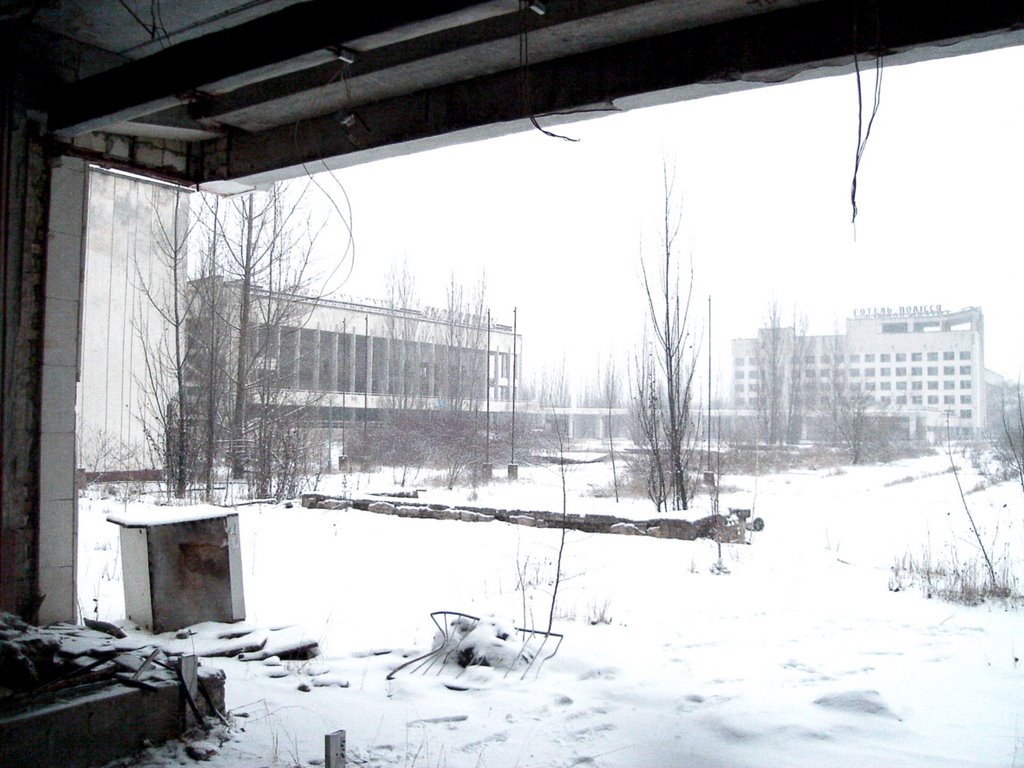
Pripyat city, home to 45,000 people at the time of the disaster.


The town square which once housed the laughter of a young rising middle class.


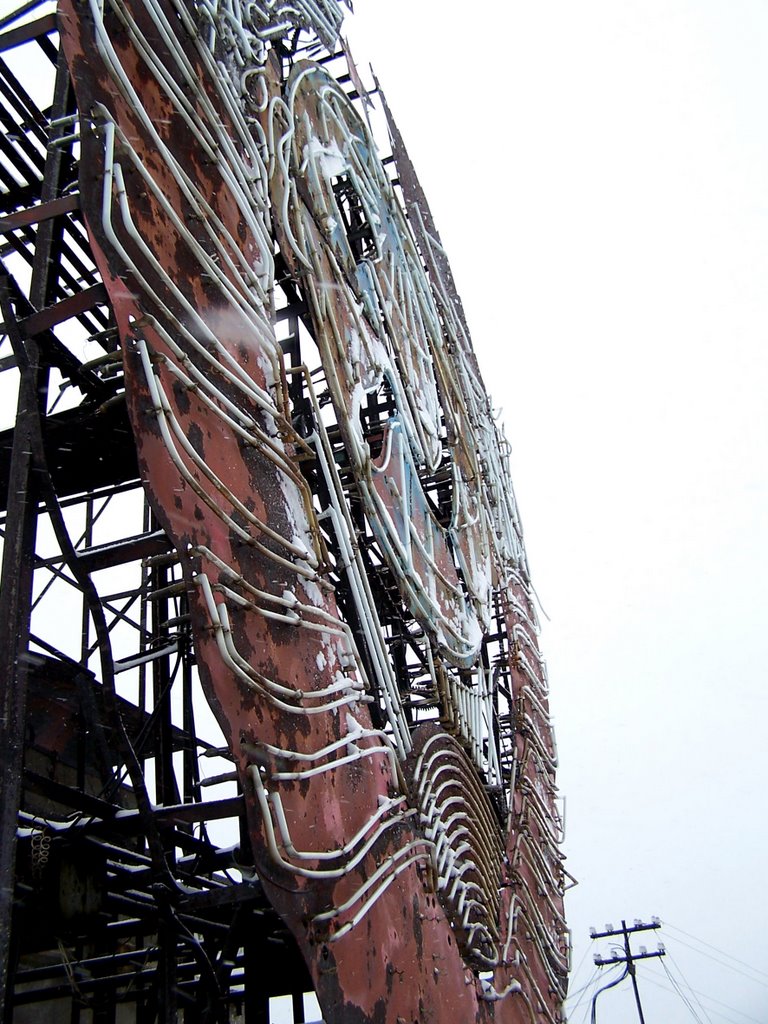
Party sign which sits on the top of the highest buidling in Prpiyat city. The power of the party looms over the city.


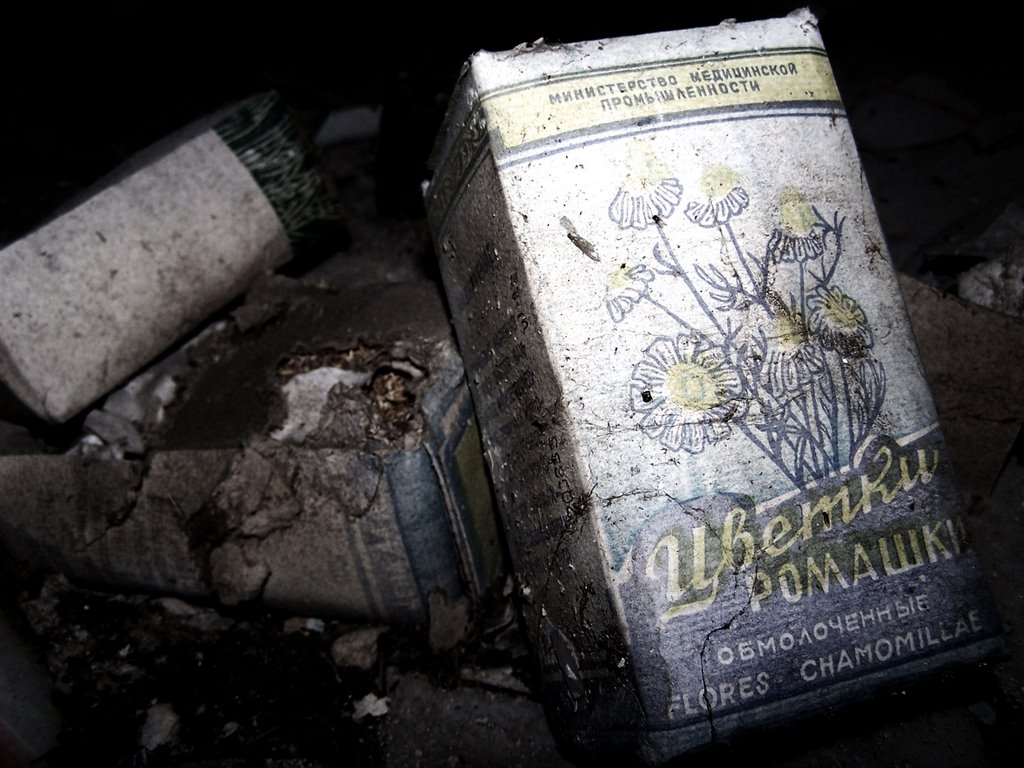
Signs that a healthy lifestyle was appreciated in the zone at one time. Remains found in the kitchen of an apartment building.


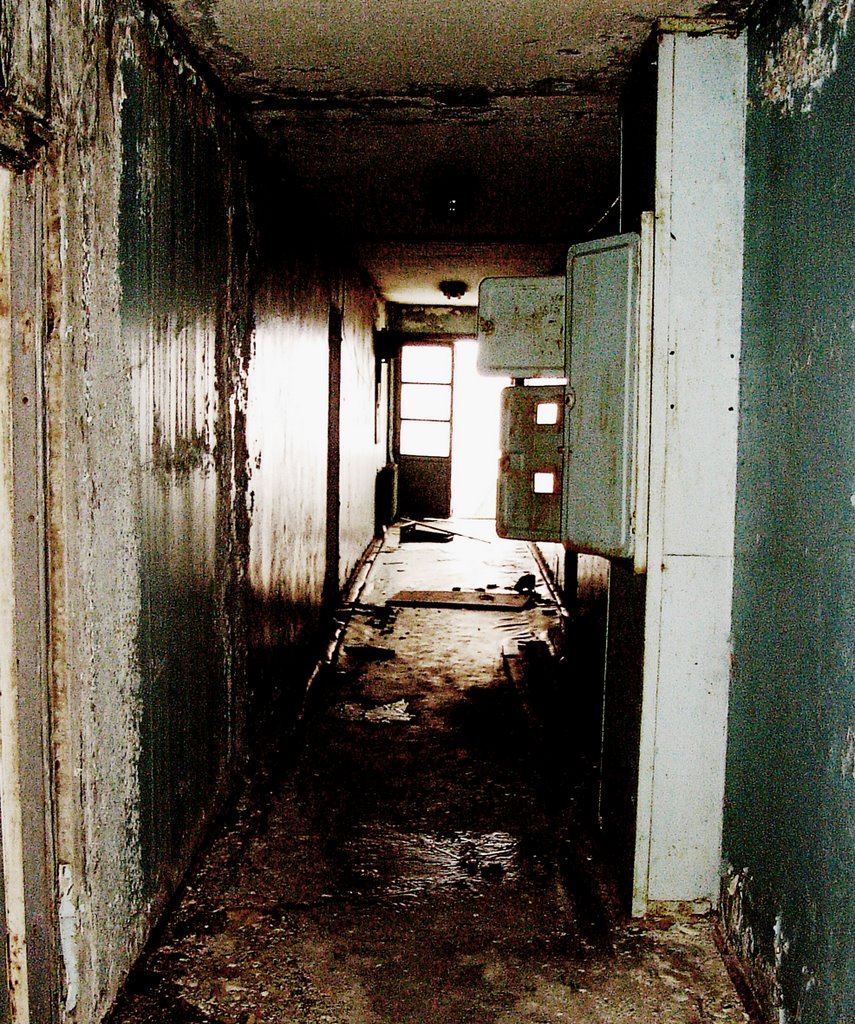
Peeling walls of an apartment building in Pripyat city.


Billboard which ironically reads "To Your Health", there are lots of these dotted around the zone, a pretty green landscapes against a backdrop of radiation.


Signs of a comfortable lifestyle. Electric goods were something of a luxury in the 1980s.


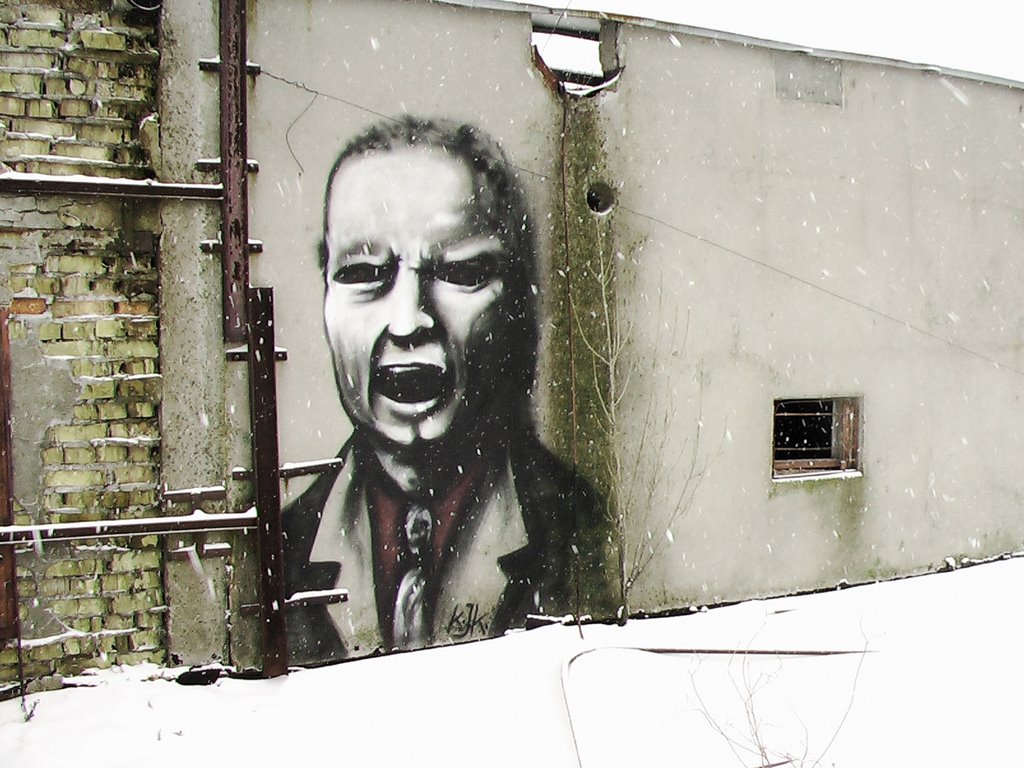
Screaminghead highlights the disaster.


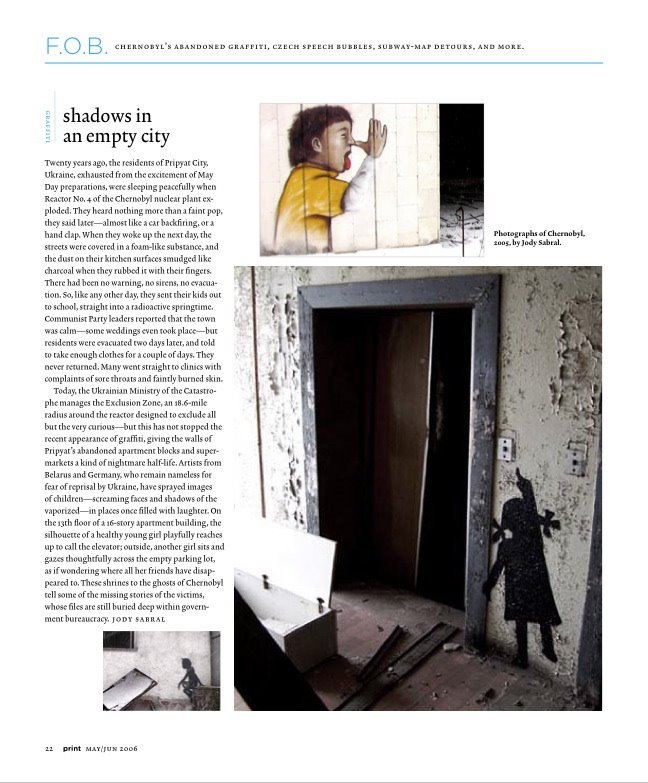
Artists have highlighted the victims of the disaster – the children.

Monday, April 24, 2006

I never include personal items, but this was too good to miss. My rock and roll dad on the left and his aptly named band. I finally understand why I feel like this often.

Monday, April 17, 2006

Click on picture to see real size

Sunday, April 16, 2006

Johannesburg, the walled city


www.flickr.com


Sabral Circle's photos tagged with johannesburgMore of Sabral Circle's photos tagged with johannesburg


Friday, April 14, 2006

Africa
Watering hole 80km from the Swaziland border

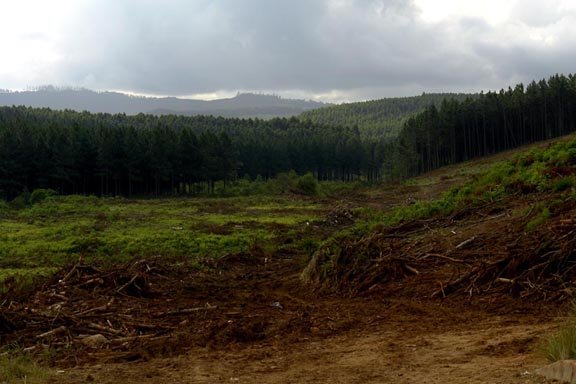
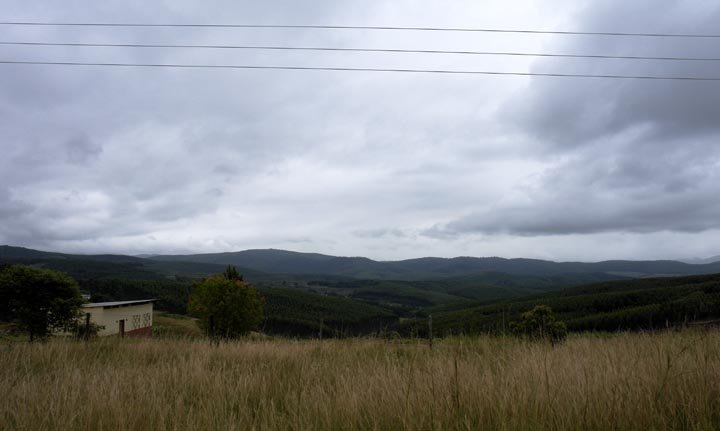
Logging up in the mountains on the Wild Frontier

Lonely House in Swaziland

Public rest stop

Headline News

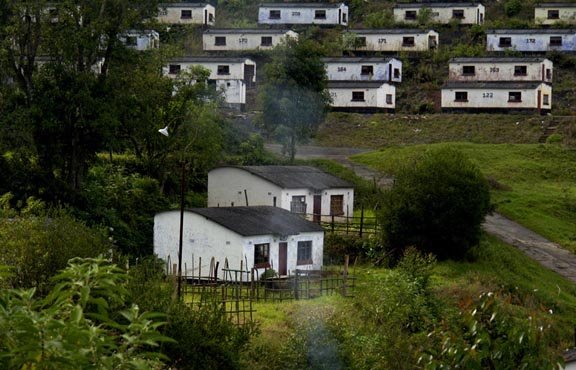
Mining village on the Wild Frontier

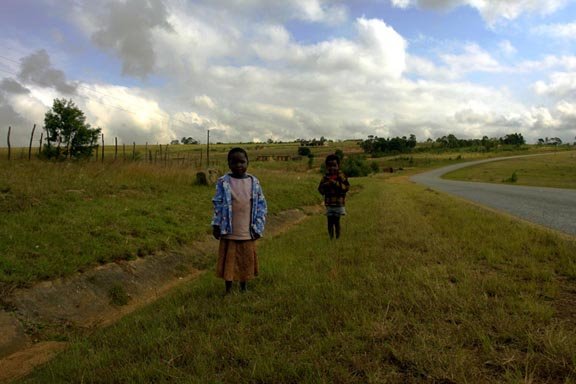
Aids orphans living on the land

Monday, April 10, 2006

Swaziland... the greenest country in the world... and a nation hooked on football with the highest rate of HIV infection in the world. UNICEF estimate that 700,000 children in a population of one million have already lost at least one parent to the disease and that 15,000 now live in child-headed households. It is however, the most beautiful countryside I've ever seen – one big mountain range of rolling green hills.


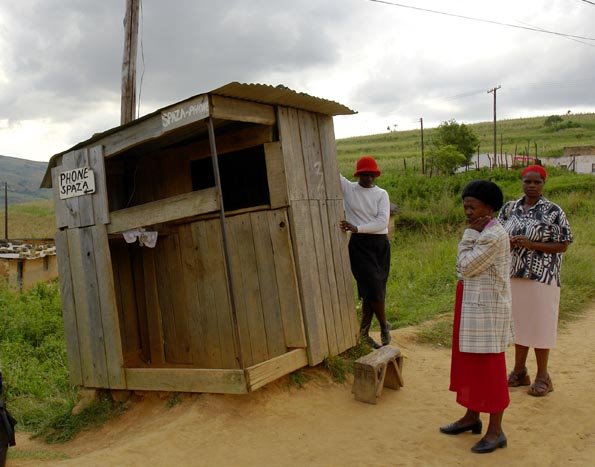
Florence was hanging out with her friends at the regional telephone booth when the car of whiteys stopped. The air was dry, and the sun was in its usual position scanning the mountain range. She was secretly glad that the red peugeot with a Johannesburg registration had pulled over, the others, in opposition, were much more suspicious.


"Look, here they come again, ask them for 20 Rand this time," Said the telephone attendant's daughter as she folded the hotel's laundry into neat squares that would fit in the canvas bag she had just found on the road from Piggs Peak.

Florence didn't care about the money these foreigners had. She had been wondering for the last three hours how she was going to pick up her youngest daughter from school today. It usually took her hours to walk across the mountain.


As the not unfamiliar white tourists armed with cameras stepped out of the car she felt she might be one step closer to collecting Mutanga on time today. It was Mutanga's sixteenth birthday. Today her youngest daughter would become a woman. She couldn't be late for the birthday celebration. There was to be a party after school, everyone would be there. It would be shameful to be late. She watched as the foreigners got back into their car satisfied with the pictures they had taken. The struggle with her inner-conscience and self confidence began.


"Should I ask them? Should I ask them? I can't. Just do it! No, why would they help me? I am nobody to them. They are rich white people. Why would they help me? But I am desperate if I miss Mutanga's birthday she will be so sad. She has never been the same since her father died three years ago."


Florence looked at her watch, the watch her husband had given her for the last Christmas they had shared together. Time was running out, there was nothing more to do, plus she had nothing to loose, she had already lost everything to an unknown force, that of Aids, a killer that she could neither understand or comprehend.

It was now or never. Now she thought or never. Approaching the red car she spoke in her best English, "Hey, can you give me a ride?" She said nervously, not knowing whether her badly spoken English would be understood.

"Sure, hop in, where are you going?"

She couldn't believe her luck. She would be on time today, on time for her daughter's birthday. They had no idea of what they had just done for her, she could never repay them. Some things are unquantifiable in this life she thought and the smile across her face was evidence of just that.

After the twenty minute car journey of pleasant conversation, they dropped her off. Florence cried as she walked into the school yard as did Mutanga, happy that her mother was on time today, while knowing that she was really the only person who could ever understand the loss of her father dying.


"Here, my daughter. This is for you on your very special day."

Florence gave Mutanga a beaded necklace that she had just spent the last four hours collecting.

"Thank you mother, I know the road is not easy with your bad knees. I love it, but I love it more that you are here."


Mutanga's class mates came running across the yard singing the sweet Umhalanga and there was in that moment nowhere else in the world that she wanted to be, she only wished that her father could have been there to see her reach womanhood.

"You will be a great doctor," said Mutanga's science teacher, "You will honour your father, we are all proud of you."

"Yes, we are," said Florence.

The dance had already surrounded them. Lost in the chanting they forgot for a moment the loss of their beloved father, husband, source of discipline and inspiration. Today was a day to celebrate life, so they gave in to the party and danced the Umhalanga until the sun went down and it was time to go home.

Monday, April 03, 2006

My driver, who lives in Soweto, told me of how his brother was shot on his way to work two weeks ago. His brother, 42-years-old, was on his way to the train station in the morning (on his way to work) and was shot by two youths. When I asked him if he knew who had done it, he said "No", and that, "It was some youths just trying to rob him, and he probably put up a fight so they shot him."

A 42-year-old man on his way to the train station in a poorish neighbourhood was shot for not handing over his wallet. The family were left behind to mourn the tragic death of their brother, uncle and son, for no real reason beyond the fact that he probably put up a fight over not very much money. A random and tragic killing, something that is not uncommon in South Africa, although, locals will tell you it's not as bad as it used to be before...

Sunday, April 02, 2006

"Memory waits quite often, like a train in a tunnel, until it senses a green light. Memory is alive, hunkering sometimes submerged, but often not. It is just kept in the dark. When it re-emerges.... reality is re-evaluated."

Wilde-Menozzi, 2001:44

Taken from "Childhood" a book compiled of South African writers and public figures, some known some not known - Mandela and JM Coetze - all of whom were asked to recall their childhood in a country that has sometimes not documented the lives of its children so well.

We as humans are exceptionally good at distorting moments in our lives. The realisation sets in, when the memory fades and a passing moment, music, smell or image reminds you of the times spent earlier - and how great or horrific they were.

In 1976, 30 years ago, the children of a South African township - Sowetto - rose up and protested the enforced learning of Afrikans in their schools. A 13-year-old boy, Hector Pieterson was shot by police in the chaos. This moment recorded changed the future of South Africa forever.

Children have sometimes been responsible for South Africa's changes, and now lie victims to the worst war of all - that of Aids. Companies are now starting to understand that for any kind of long-term growth plan they must offer healthcare packages in order to treat their sometimes 30% infected workforce as well as their families.

It is a difficult topic for the government to deal with, although constitutionally every South African citizen has a right to healthcare, however, with the current rate of AIDS and HIV positive patients, this would bankrupt the country. The cost of ARTs is not cheap, and these meds must be perscribed to a patent forever - implications of which dictate a sincere committment by all involved.

A lifetime promise must be made by each employer to his or her employee. It is already happening, thankfully, there are a few industrialists who are leading the way in HIV treatment for South Africa's labourforce.

Today many companies have healthcare programmes for their employees, but it is still not enough. The government must take some action over ARTs. I imagine that the new dispensing fees for pharmacies, which are aimed at reducing the price of medicine by up to 15% may be a drive in this area. But, at this point it is purley speculation, hard evidence will follow. It may also of course, be merely a concern by the drug companies in their fight against counterfeit meds - we will see?

Friday, March 17, 2006

Plovdiv, a city of good wine, music and historical battles.

Plovdiv can lay claim to being one of the oldest cities in Europe, even older than Rome, Athens, and Istanbul (Constantinople). The first traces of civilization date back to the Mycenaean period.

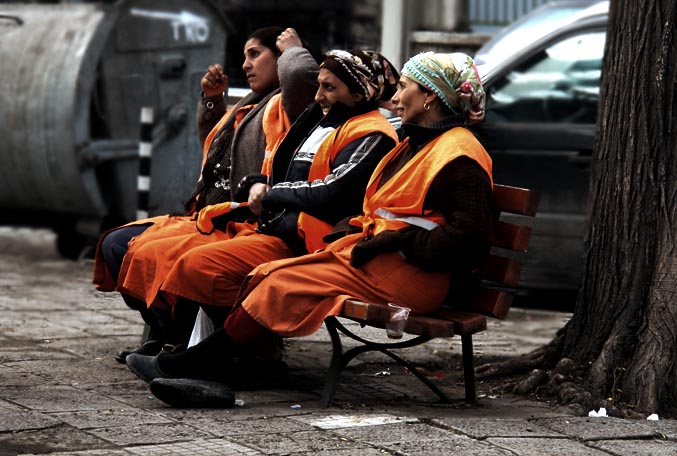
I was posed the question by a friend far far away, "Do Gypsies still exist in Bulgaria?", Here's your answer. Yes, Gypsies still exist, and are these days employed by the municipality – not directly I suspect but most likely by a contractor of the government. On the one hand it was good to see that this group, which lives on the outside of society, is in Plovdiv working within it, but at the same time what other job could they really do?


http://en.wikipedia.org/wiki/Gypsies

Under Ottoman rule, Plovdiv was a center of the Bulgarian national movement in Eastern Rumelia. While the city was liberated from the Ottomans during the Battle of Plovdiv in 1878, it was not originally part of the newly established Principality of Bulgaria. Instead it was the capital of the semi-independent Region of Eastern Rumelia, until that area finally joined Bulgaria in 1885 after the Unification of Bulgaria. Plovdiv is the original capital on Bulgaria.

Today the city is rich in music, arts and culture. Take a walk through the old city and as you pass the Academy for Arts and Music, you can hear a violin singing softly. The notes seep out of the classroom and down into the old cobbled streets.

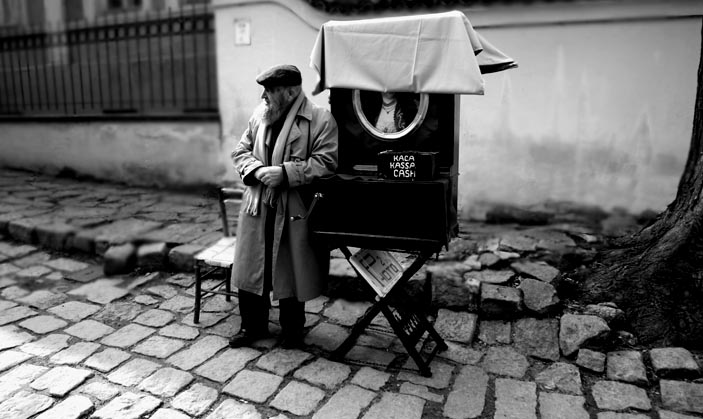
A man winds his music box for pennies in the Old City.


Under communist rule since the end of World War II, Plovdiv was the center of that country's democracy movement, which finally overthrew the pro-Soviet regime in 1989. Many battles were waged in Bulgaria, which is why the people say these days there is peace – "a tired nation", a man who works at the Ministry of Agriculture said. The great Turkish-Russian War was fought at Plovdiv.

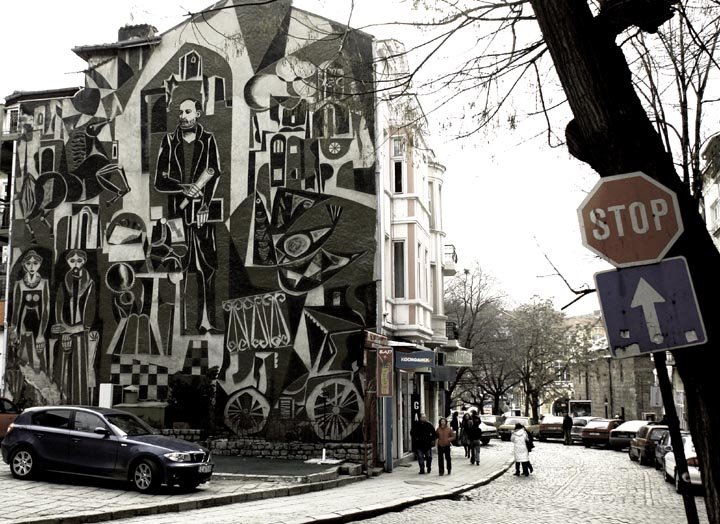
Murals are commonly found in and around the city...


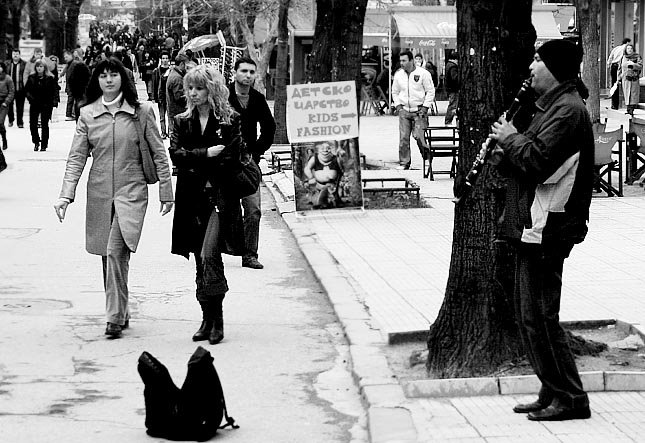
As are street buskers...


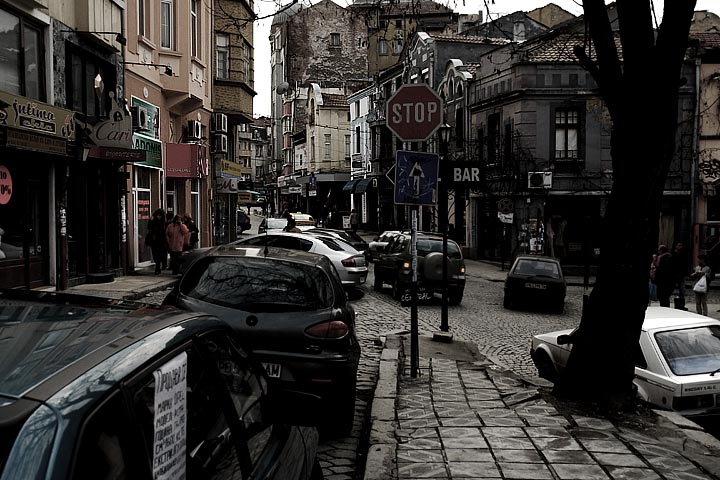
The windy streets of downtown are home to cute cafes, boutique clothing stores, mosques and churches alike. A church bell rings followed by the Namaz, evidence of the peacful existence between both Muslims and Christians.


Well worth a visit...

Thursday, March 16, 2006

Bar Talk


“Life is like Carrefour, you place your order and you get what you want.” Hagen said taking a swig from an oversized pint of Danish beer.
Running through Farah’s mind was the old proverb “behind every strong man is a strong woman”, but she didn’t dare say it, a little clumsy perhaps to say such a gender centric cliché to a European, so instead she said, “Two heads are better than one.”
“Exactly! The Clintons, they’d never have made it alone, it takes two to be successful, a counterpart is all I want. I have one but sometimes she is strong, but sometimes it's not enough.” Hagen said in a weary watered down Hanover accent.
Zac stretched out his hand, “Zachary, nice to meet you.”
“When you find that woman, don’t let her go. That’s my advice from 46 years of experience.”
Farah smiled and thought back to last summer and remembered the feelings of sharing her utmost self with the only man she’d ever truly loved. Then she wondered why she was still thinking about him at all and consoled herself in the fact that he just wasn’t experienced enough to understand what had been on offer.
“The Queen speaks German, she’s German, we are a nation of thinkers, we want to solve problems. We may not have any resources, no steel, nothing in the ground. But we have our minds.”
Zac moved closer to Farah in a naturally protective fashion.
“I don’t want to think German anymore, I am ready to give up my German and become European. We are European, and the British and the French are just fucking that up.”
Farah finished off her side dish of sautéed vegetables.


“I learned in the US to survive, I didn’t learn any facts in my university years in Germany, but I learned to survive, to be an individual. These people here they don’t want to be individual,” Hagen said.
A Brit, an American and a German, sipping from their drinks at staggered intervals in a central location, downtown Sofia – what a bunch Farah thought, what a bunch!
“No one wants to take responsibility, they want the power but not the responsibility,” Zac at long last had joined the conversation.
Farah said nothing but just listened, attentively, and knowingly that the German sitting to her right would surely have some answers to her many questions, the questions she had been trying to ask the ministries repeatedly for the past month. What a spot of luck she thought to have ended up sitting next to a German businessman who was working on the government deal with Siemens to supply the much needed rolling stock, the deal she had to write about. The ministries had proven themselves useless at offering up information, but a German, what a spot of luck she thought.
“All I want is a house on a hill, with some steps down to a private beach, just two metres, doesn’t matter, with a wife who I can have sex with three times a day,” Hagen was voicing his ambitions.
“It’s not about the result, it’s about the journey,” Zac’s mum with her masters in therapy, was quite clearly a huge influence in his life.
“Isn’t that what every man wants,” Farah joined the conversation again having finished her side orders.
“Yes, a simple life,” Hagen added. “What is that not what you want? No it’s not is it, a woman wants more brain.”


Farah smiled and again thought back to her last relationship, which she thought had been based on “brain” as Hagen put it, but then she thought that’s probably why it had all gone wrong. Of course, she thought, that’s not what he had wanted. It had been his initial face, it had to be. An intellectual himself, but at the same time it went against everything that made him a man according to his dad’s outlook. It had been drummed into him by his father for 25 years, “don’t listen to your mother, she’s just a woman”. He had no respite she thought. We were doomed from the start.
“Do you know how you are going to pay your bills for May?” Hagen said.
“No, I don’t, honestly I don’t, but I’m doing what I love and it’s just kind of moving.” Farah realized that for the first time in her life, she was completely free. Her job was as mobile as the cell phone tucked in her jean pocket. She could absolutely move with the wind, or the story more importantly.
Hagen looked puzzled, but at the same time a certain respect washed over his face.
“No planning? No planning at all?”
“None, it’s been this way for the past year. I can’t explain it, but for some reason, it’s kind of working out. That’s all I can tell you.”
And it was she thought. It was somehow. Somehow it was.
Sunday, March 12, 2006

Shooting Sofia

The sun was shining on Sofia for the first time in months. The never ending rain and snow filled pavements made it sometimes difficult for Bistra to walk, which had these days, just become a good excuse for her to stay at home. The icy paving slabs were her first line of defence when asked to venture out, since the slaying of her only son, Georgi, some six years ago. At the time of the hit Georgi was driving a black mercedes in rush hour traffic. Not acknowledging this vital piece of evidence, Bistra had convinced herself it was a hit which had "gone wrong", and that 19-year-old Georgi was an innocent bystander in the crime. In reality, everyone knows that mafia hits rarely "go wrong" in Bulgaria. And innocently wounded bystanders were not common in this town.
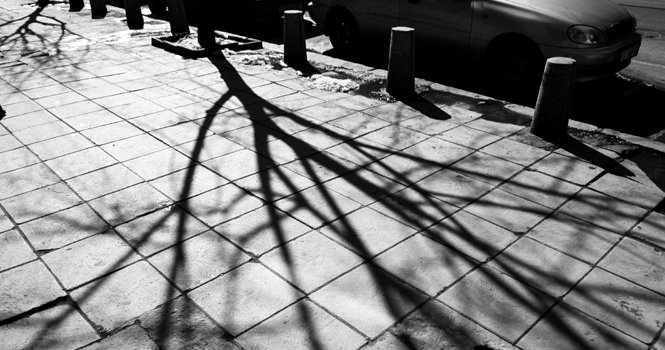
Just last week a guy had been hit clean in the head while tucking into a medium-rare Beef Rosini at his favourite restaurant. They say that the killer hit the target from a range of up to about 50 metres. A sniper, so they say. Guess it doesn't pay to have a favourite restaurant in this city. There had been some 150 killings within the last three years with zero prosecutions, Georgi knew what he was doing, either that or he had just got himself in too deep.


The 48-year-old Slav, had peered out of her window often, but just couldn't bring herself to venture out, constantly living in fear that she would have to revisit the site of the killing. It was easier to stay inside and remember the happy days of walking arm in arm along Vitoshe Street with her son. But today, looking at the sunshine, she ached to go out, to feel the warm rays on her pale skin.

"Let's go sell some gravy in the market, " Radistina said – Bistra's best friend. The best friend who had for the past six years been her lifeline to the outside world. Radistina would sit and read the newspaper everyday at 2pm to Bistra, and then discussions would follow. However, she was always careful to censor the weekly "mafia hits", which occurred in the Bulgarian capital.

"OK, let's go out," said Bistra in a somewhat unfamilar tone.
Radistina quickly got the coats from the hallway, not wanting to make a big deal out if it, for fear that Bistra would change her mind.
"Let's go to the market and sell gravy like we used to," Bistra said.
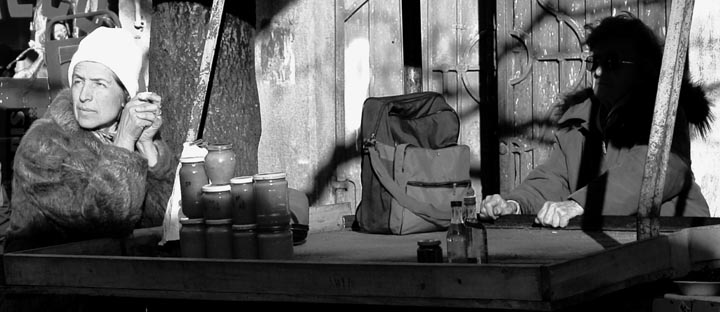
Radistina quickly went to the pantry and gathered a few jars from the overstocked and collapsing shelves, that were also laden with cartons upon cartons of cigarettes.


Standing in the market like they used to, Bistra placed herself in the sunshine, it felt good.
"When will I stop thinking about it," she asked her best friend, "it just seems like yesterday that we were walking through these streets together, me and my Georgi."
"It's always going to feel like yesterday, I'm afraid to tell you. You loved him. Love doesn't just disappear, not real love."
"Let's talk about the people we see, I want to think of something different today."
Radistina smiled and thought maybe her best friend was finally starting to free herself from missing Georgi. While she knew it would never leave her, it was good to see her oldest and dearest friend bathing in the Sofia mid-afternoon sunshine.

Things are going to be better she thought, better, better, better. The sun was at least shining again.

Tuesday, March 07, 2006

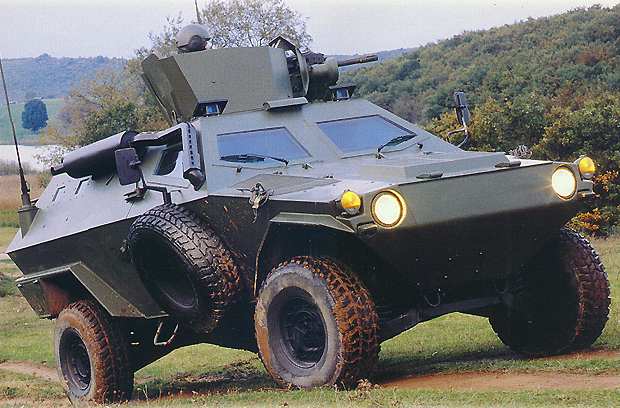
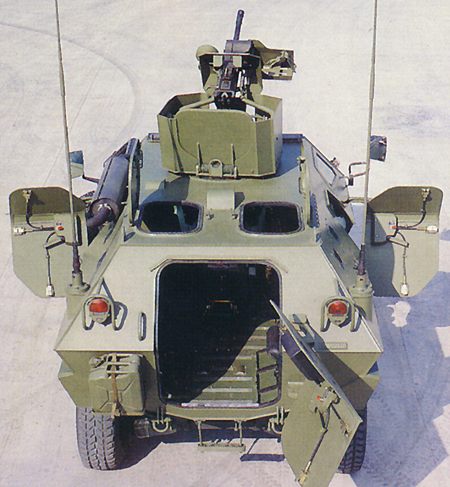
Bahrain government purchases 22 Cobras from Turkey

The Bahrain government has recently purchased 22 Cobras from Turkey, and at $400,000 a pop that's no small amount of petrodollars we are talking about. Designed and produced in Turkey, the Cobra comes complete with an amphibious kit. "An optional amphibious kit consists of double hydraulic thrusters with joystick control and closing louvres. The system allows the vehicle to enter water without preparation," reads the the sales jargon.


Currently the Turkish military have four, so the nautical engineer, who works for the company told me, on my return journey from Bahrain. However, this report states that there are five currently in operation in Turkey. "The Cobra family of light armoured vehicles is manufactured by Otokar Otobus Karoseri Sanayi in Turkey. The Cobra designs incorporate the mechanical components of the HMMWV vehicle from AM General of the USA. Cobra vehicles are in service with the Turkish Army (five vehicles) and the Maldives (three vehicles)."


Interesting that Bahrain with a population of 707,000 people should need 22 of the beasts. The engineer I sat next to on the plane, said that there are currently only two people in the kingdom that can drive these great contraptions. Personally I'd like to drive one down Istiklal on a Saturday, it would certainly cut down on parking problems – you could just roll on up and roll on over – what ever gets in your way!

The King of Bahrain was in Turkey only three weeks ago, although it was not widely publisized, was he inking the deal? And why was he inking such a deal? The editor at Al-Wassat newspaper, Bahrain, wrote up a piece based on the information I'd gathered on my trip back to Turkey – my source: I saw the photos of the damn things being driven around like rally cars on the mudflaps of Bahrain and spoke to the engineer who had gone there to train the drivers. Straight from the horses mouth as they say.

The official word is "No response from the government yet".

For more info on these fun little rides:http://www.army-technology.com/projects/cobra/

Monday, March 06, 2006

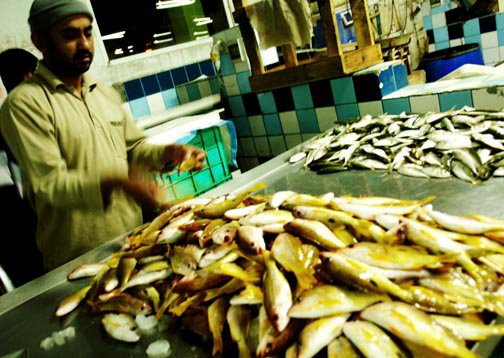
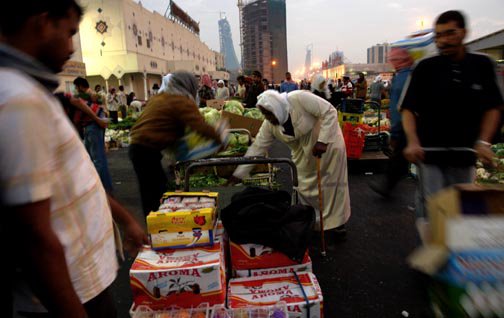
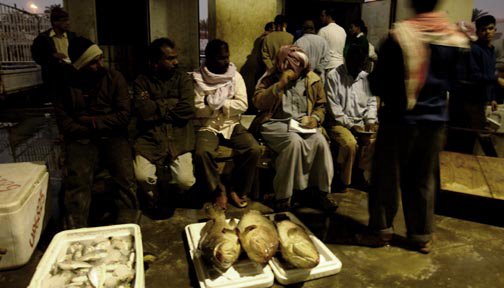
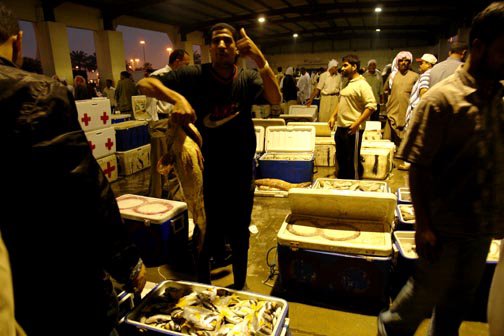
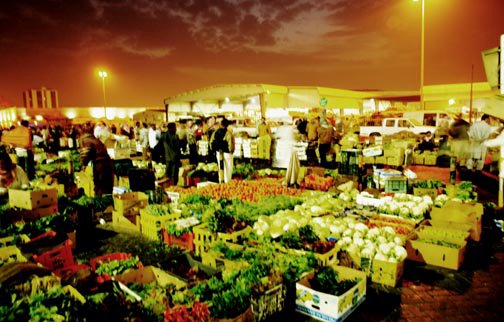
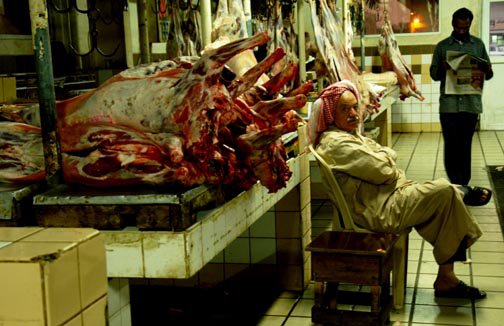
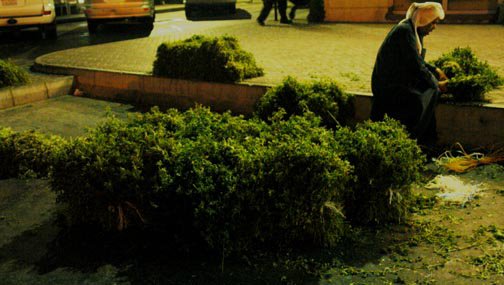
Central Market, Bahrain 5.30 a.m. Beyond the skyscrapers that house the region's financial centre, Bahrainis go about their business as usual...


Thursday, March 02, 2006

The results of reporting in Bahrain:

Dear Jody,

It was great meeting you and thanks for your e-mails. The eldest son of the tortured man visited the society and I filed his case with full information. I transferred his case to Karama Centre and the doctors will follow it up.

A. Alderazi

Abdulla Alderazi is the Deputy Secretary General of the Bahraim Human Rights Society

Unfortunately I received a phonecall on Friday night from Mohammed who told me that his uncle was now in the IC unit, barely breathing. Mohammed also told me that he had to lie and say that he was from the UN in order to get in to see his uncle. It seems that we may have got to his uncle too late. While this family suffers the pain, which their own country has inflicted on them, all I could do was try to reassure them that at least his uncle was in the right place, and would hopefully have the drugs needed in order to reduce the physical pain. Although the trauma will never find closure.

Tuesday, February 28, 2006

Bad News...

The winds were blowing at a rate not seen in over fifty years, or so the weatherman said. Neither of us had bothered to check the forecast that morning, both wearing flimsy springtime jackets which were of no protection, but it didn’t matter anyway – loss masks the senses, and allows for a type of self annihilation. The spray off the Bosphorus blowing across the tea garden shooting directly for us was the least of our worries. Our bones soaked up the damp cold. Couples and old men ran to the warmth of their cars, while we sat paralysed by the news we had received just hours earlier, the wincing cold was nothing compared to how we both felt. The tea helped somewhat towards us both not getting pneumonia. Sitting in silence, staring at the steam evaporating from the small bevelled tea glass, we couldn’t even speak, for speaking would drown the reality that our best friend was not coming back, ever. Locked in a moment not wanting to move forward we both sat there remembering the times that had gone before. The silence was deafening. A balmy summer day, was the last day we had all been together, laughing about how ridiculous life is. Life had moved on, a kind of manufactured reality, a new environment had surrounded all of us, and everything was fine, but we knew somehow that this day would come, the day when we would see each otehr again to address the fears of what had gone before. We knew why, but had managed to store it in the deepest parts of our consciousness. The months rolled by, until one morning, one spring morning we had received the news that our friend would not return from his last asisgnment. There it was, the final arrival of bad news, and all we could do was sit there for hours, just sipping hot tea, being pelted by the salty spray from the Bosphorus, hoping it would wake us up, from the numbness of the loss we both felt.

Barking Sparrows 2006

Thursday, February 23, 2006

Journalism has many purposes, this is one of them...

It's not the publishing. It's not the finished product pretty and complete. It's asking questions – lots of them, and being impartial. It's curiosity and listening to the everyday story that lives in the streets of every town, and then gathering the information like a spy, but further reporting it to the people who matter. The people who need to know.

Tonight I stood in a bar with the Deputy Secretary of a Human Rights Society, who had called me as word had got around that I was interested in the story of innocent people who had been victims to torture. My phone rang, it was the family of the victim of torture I had met four days previous. He wanted to say goodbye and to invite me to dinner in the village.

I passed the phone to my drinking partner. They spoke for a few minutes. The phone was passed back to me. He thanked me again. I hung up. I had made a connection between a man who was desparate for advice, and someone who could help. The outcome of the series of events that I have been party to on my trip to Bahrain is as follows:

A family who had been so scared and lost over where to go will now receive medical help from the society. And another case of torture will be registered that will add to the campaign against the government to offer some real kind of reconciliation. These families, and there are many, are lost over how to deal with the stigma and fear of coming forward and seeking real help.

A doctor will go to the village and visit the victim. The case will be assesed. The government will not publish all cases, and this is another step towards these cases being aired. Hopefully the society will be able to aid with medicince through the volentary medical teams they have working on their programmes.

The Human Rights friend, said that he may now even put an advertisement in the newspaper callinng for all torture victims to come forward and get the help that they didn't know existed, and with a dilay newspaper now running a daily campaign on the subject,which started this month, it is finally being aired, and the government can not ignore it anymore.

The fact that these victims can now get help – recent development since 2001 – means that a mood is changing. The main problem is the stigma attached to seeking psychiatric help. Trauma is sometimes harder to see than the physical disability. Another case to add to the campaign and a person who will at long last get some recognition and the medicare he needs.

This the real joy in reporting, is reporting the stories to the people who matter.

Monday, February 20, 2006

Violation of Freedoms

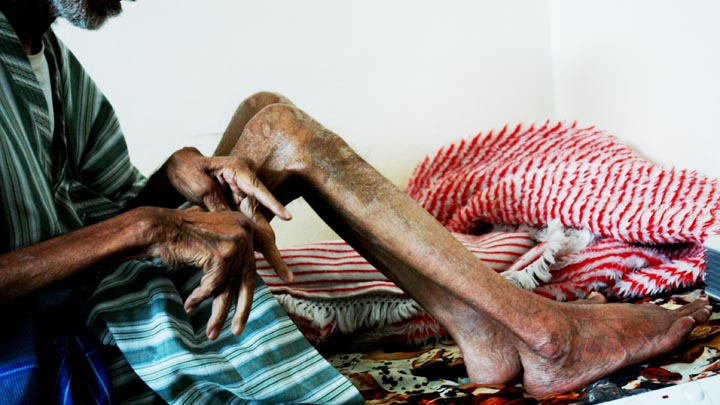
A man so badly beaten by prison guards that he was permanently damaged at the age of 36 years old. His passport reads born in 1956, but he looks like it should say '36. Taken from his house one night twenty years ago, he was held in prison for two years with no charge. Only that he had helped raise money to buy food for his brother and other people he knew, who were being held as political prisoners. He is so scarred from the beatings, he never recovered, bed ridden for twenty years, not able to work, deterioration has set it.


A room 2 metres x 2 metres with six inmates was his residence for two years. Taken daily for beatings, he was given a piece of meat a few times a week – cut to 1inch in diametre. Shower time was five minutes once a week. Made to stand for 24 hours sometimes with no food, or often thrown old chicken bones. Torture and humilation wore him down eventually. He is home now and his family surround him.

Once he was a model of good citizenship. Working in the national oil and gas company, but was held hostage for the good he did in his community. He is sick, and no body cares. No apology was issued. His colleagues forgot about him all too quickly. He has had no visitors beyond his family since his release. Yet, he still believes that helping the needy was worth it. He would do it again if he had a choice. He wants to get healthy. That's all he wants. He is afterall only 50 years old.


The political environment is shifting, a reason this family invited a stranger into their house to tell his story. The spies are gone now, and although it remains both faceless and nameless for fear that the the horror may return. It lurks on the horizon, but not in the village streets anymore.

Tuesday, February 14, 2006

Asura Holiday Bahrain...

Even locals told us not to go, fear is ignorance. we went, we explored challenging the idea that two Westerners would not be welcome at a Muslim holiday, in a souq filled with 10,000 Arab men and women. It was moving and interestingly calm. Passionate, agressive and coordinated. The sounds were the most impressionable part of the long evening. It was difficult to take photos, while being sensitive to the events that were unfolding infront of us.... This is a small snapshot of what we saw.


Zeynep, 9 years old, two brothers a sweet smile.


The women...


The men...


The chains...


Yes, Islam is political; Yes Islam is passionate; Yes islam is violent at times...
I think we have to separate the politics from the faith, but how?
Islam does feel like it is under attack, the perpetrator of 911 is winning. The cartoons?
Sensitivity and an understanding of what this means to a diversity of cultures has been overlooked.
Is "Freedom of Speech" the new religion?
The West – another generalistion, that has many qualities which are sometimes overlooked.
We live in a world of generalisations, when will we stop and consider that people need people.
Separate the politics from the people, and start listening.
Understand the subtleties in what people say, and what their reference point is – and listen.
Somewhere in the Bahraini desert...